The Quiet Evolution of Scams
Fraud is changing in ways that can be difficult for organisations and individuals to detect. While many scams still rely...
Read More

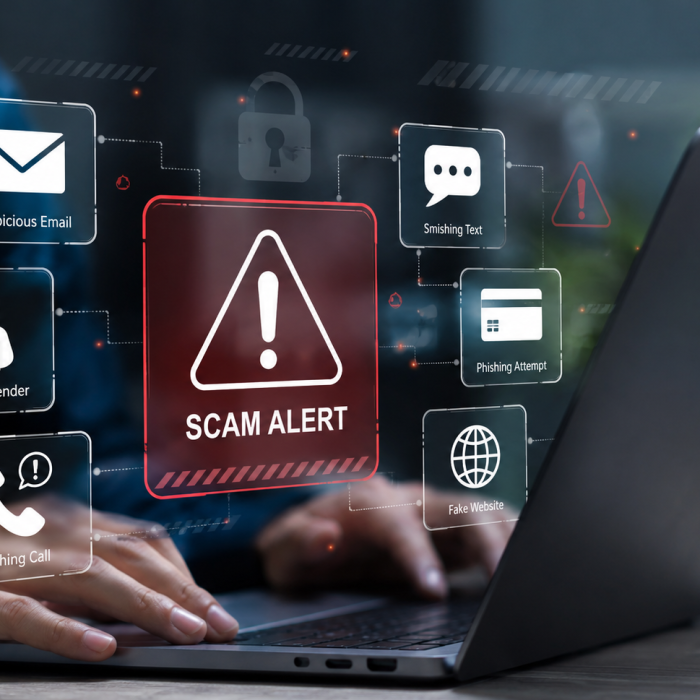
The attacks began with emails masquerading as official Home Office communications. Using urgent subject lines about licence suspensions or compliance failures, they directed recipients to a login page almost indistinguishable from the real Gov.uk portal. Victims were often asked to complete a CAPTCHA, an extra step designed to enhance credibility, before being funnelled to a fake website where their credentials were harvested.
Cybersecurity firm Mimecast reported nearly 8,000 of these phishing emails circulating in early July, with a further 2,500 detected in the first week of August. The scale suggests a well-organised operation aimed squarely at exploiting systemic vulnerabilities.
Compromising an SMS account provides attackers with extraordinary leverage. With stolen credentials, they can issue fraudulent Certificates of Sponsorship (CoS), paving the way for illegitimate visa applications. Reports suggest that in some cases, fake sponsorships were sold to victims for up to £20,000, often tied to non-existent or exploitative job offers.
Beyond financial fraud, the integrity of the UK’s immigration system itself is placed at risk. A compromised sponsor licence not only damages the reputation of the organisation involved, but can also undermine public trust in the Home Office’s ability to manage migration securely.
For higher education, the implications are particularly severe. Universities rely on sponsor licences to enrol international students. A breach could see institutions accused of negligence, with their licence suspended or revoked, leading to reputational damage and financial loss from tuition revenue.
For businesses, particularly in sectors facing skills shortages, compromised accounts could disrupt recruitment pipelines and trigger compliance investigations. Even immigration law firms and recruitment agencies face reputational risks if their systems are abused to facilitate fraud.
The campaign also highlights broader weaknesses in identity verification processes. By successfully impersonating the Home Office, attackers bypassed the very KYC and AML controls designed to prevent fraudulent onboarding in financial and corporate contexts. In that sense, the attack is a stark reminder that phishing remains a universal vulnerability across all compliance-driven sectors.
The Home Office has urged licence holders to treat any suspicious messages with extreme caution and to only trust emails from official @homeoffice.gov.uk domains. While awareness is vital, organisations must also recognise that phishing campaigns are designed to bypass even the most vigilant employees.
Stronger technical controls are essential. Multi-factor authentication (MFA) for SMS logins, even if not mandated, should be enforced internally. Password rotations and strict role-based access can further reduce exposure. Email security solutions that rewrite or sandbox suspicious links can block many phishing attempts before they reach an inbox.
Equally important is a culture of verification: unexpected requests should always be cross-checked through known and trusted channels rather than acted upon in the moment.
While the SMS campaign directly targets the UK’s immigration system, the lessons extend much further. Phishing remains the single most common and effective entry point for fraud and cybercrime, whether in financial services, healthcare, or critical infrastructure.
The attack demonstrates how criminals are moving away from opportunistic “spray and pray” tactics and towards highly targeted operations against high-value systems. It also underlines the convergence of cybercrime and fraud. What begins as a phishing email can evolve into an entire black-market economy of fake visas, false job offers, and human exploitation.
The reputational damage, regulatory consequences, and operational disruption that follow are not abstract risks, they are business continuity threats.
At AJC, we work with organisations across education, business, and recruitment to build resilience against phishing and other targeted cyber attacks. Our cyber security services include:
By combining technical expertise with practical guidance, we help organisations safeguard not only their operations but also their reputation and the trust placed in them by regulators, partners, and clients.
The phishing campaign against the UK’s Sponsorship Management System is more than just another security incident. It is a case study in how digital trust can be eroded when critical systems are left vulnerable.
For organisations across education, business, and recruitment, the message is clear: invest in layered defences, educate your teams, and treat access to sensitive platforms with the same seriousness as financial systems. In an era where fraudsters innovate as quickly as technology allows, vigilance is no longer enough. Only a combination of awareness, technical resilience, and sector-wide collaboration can keep the gatekeepers safe.
Contact us on 020 7101 4861 or email us at info@ajollyconsulting.co.uk if you think we can help.
Sources:
https://www.infosecurity-magazine.com/news/home-office-phishing-uk/
https://dataconomy.com/2025/08/13/phishing-campaign-targets-uk-migrant-sponsor-system/
Image accreditation: Towfiqu barbhuiya (June 2021) from Unsplash. Last accessed on 10th September 2025. Available here.
Fraud is changing in ways that can be difficult for organisations and individuals to detect. While many scams still rely...
Read More
Artificial intelligence is rapidly moving from experimentation to everyday business use. However, as adoption increases, the success of AI depends...
Read More
The UK government has launched its latest fraud strategy, setting out a three-year plan to combat what remains the most...
Read More